
The lecture video can be found at:
http://www.youtube.com/playlist?list=PLo0Yg9pFZD1L1gbBjCClXngc79gMPkcxn
The lecture video can be found at:
http://www.youtube.com/playlist?list=PLo0Yg9pFZD1L1gbBjCClXngc79gMPkcxn
One of the world’s foremost experts on Asian economies says Australia risks being dragged into a cold war between China and Japan.
Wing Thye Woo was born in Malaysia, has advised numerous governments on economic issues, and is now Professor of Economics at the University of California.
Details can be found at: http://www.abc.net.au/news/2014-07-10/extended-interview-with-wing-thye-woo/5588858?section=business
Dear CESA Delegates,
Many thanks to you who had provided positive feedback to me about the conference either in person or by emails. For those who came from out of town (country), hope you had a good trip back home.
Over the 1.5 days of the conference, we were inspired by the path-breaking research and dramatic life events of Professor Xiaokai Yang. We were also blessed by the stimulating and insightful keynote speeches, high-quality paper presentations, dedicated staff members, and enthusiastic graduate student volunteers. I have attached a photo taken by our professional photographer. Hope this image will render some memorable moments at the conference.
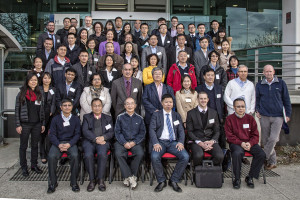
Please be reminded that we will be running a Special Issue of the China Economic Review for the CESA conference. Submission deadline is December 31, 2014. Graduate students who authored or co-authored a paper presented at the conference are encouraged to enter a competition for the Best Student Paper Prize by the end of this month.
With best wishes,
Tony
Tony Fang, PhD., Associate Professor
Director, Master of International Business (Australia, Malaysia, South Africa, China)
Monash University
Sir John Monash Drive
Caulfield Vic 3145 Australia
Phone: +61 3 9903 4156
Fax: +61 3 9903 2718
Email: Tony.Fang@Monash.Edu
CESA Council Member
Past President, Chinese Economist Society
J. Robert Beyster Fellow, Rutgers University
Associate Professor, University of Toronto
Research Fellow, IZA
http://www.iza.org/en/webcontent/personnel/photos/index_html?key=7675
Should China cut interest rates?
By Guonan Ma, Bruegel

Against a backdrop of weakening domestic demand, and in the slipstream of a major debate about whether Chinese monetary policy in the last year has been too restrictive, there have been definite signs of Chinese monetary loosening in recent weeks. This makes sense. Timely and measured monetary easing will support growth, facilitate structural rebalancing and underpin rapid economic reform.
Read more at Financial Time…
How loose is China’s monetary policy?
– has the People’s Bank of China outdone its major international peers in the latest global monetary easing game? The short answer is no.
by Guonan Ma on 1st July 2014
On the contrary, among the major central banks, the PBC appears to have tightened the most since the global financial crisis, on the basis of both ex-post real policy rate and real effective exchange rate.
In my recent blog, I discussed the debate over whether China’s monetary policy was excessively restrictive before the latest monetary easing. There, the debate was framed mostly from a domestic perspective, using a closed-economy version of the Taylor rule. This is in part justified on the ground that China’s capital controls still bind (See Ma and McCauley, 2007). Of course, China, known for its so-called ‘export-led’ growth model, hardly qualifies as a closed economy. | Read more at Bruegel
How tight is China’s monetary policy?
– has China’s monetary policy stance been too restrictive lately? If so, how should the PBC ease monetary policy?
by Guonan Ma on 11th June 2014
There have been definite signs of monetary loosening in China in recent weeks. Nevertheless, for almost a year, the debate continues to rage over whether the People’s Bank of China (PBC) should loosen its monetary policy more meaningfully in a situation of weakening domestic demand (see Chinese reports by Caijing). Has China’s monetary policy stance been too restrictive lately? If so, how should the PBC ease monetary policy?
Read more at Bruegel…
On 11 July 2014, the China Economy Program within the Crawford School, in collaboration with the Rio Tinto–ANU China Partnership, will present the fourteenth China Update. At this annual event, leading academics, policy makers and government representatives discuss the latest research on the Chinese economy. Over the years, the China Update has cemented its status as Australia’s premier forum for in-depth discussion and analysis of the Chinese economy.
This year’s Update will address the following topics:
The 2014 China Update will coincide with the launch of Deepening Reform for China’s Long-Term Growth and Development, edited by Ross Garnaut, Cai Fang and Ligang Song. The book is published by ANU Press with the Chinese Social Sciences Academic Press publishing the Chinese language version.
More details can be found at: https://crawford.anu.edu.au/chinaupdate/.
China’s financial liberalisation: interest rate deregulation or currency flexibility first?
– part one
by Guonan Ma on 13th May 2014
Part I discusses three institutional factors favouring a strategy of greater currency flexibility ahead of fuller domestic interest rate liberalisation. Part II (coming later this week) explores three cyclical factors that would tend to favour the same strategy.
China’s central bank, the People’s Bank of China (PBC), is currently negotiating a tricky transition away from a convoluted monetary regime that features a managed currency, a controlled capital account and a regulated domestic interest rate. Chinese policymakers have so far pursued a financial liberalisation strategy involving simultaneous and small steps on all three fronts: incremental opening up of the capital account, deregulating most of the domestic interest rates except the official ceilings on benchmark bank deposit rates, and instilling some two-way FX volatility into the renminbi (RMB). The global financial system and economy has a big stake in the fate of Chinese financial liberalisation, which is promising but risky.
Guonan Ma’s latest blogs on the Chinese Renminbi
Chinese Economics Society Australia (CESA) 26th Annual Conference
Monash University, Melbourne, Australia, July 7-8, 2014
“China at the Crossroads: The New Phase of Economic Reforms, Industrial Upgrading and Economic Development”
About the Conference: The conference is organised by the Faculty of Business and Economics, and the Centre for Development Economics at Monash University in Melbourne, Australia, and Division of Economics, Nanyang Technological University in Singapore. It is the 26th Annual Meeting of the Chinese Economics Society Australia (formerly known as ACESA).
After nearly 35 years of exceptional economic growth at an average rate of 10 percent per year, China is now at the crossroads. According to the World Bank, China is projected to surpass the US as the world’s largest economy (measured by GDP) by 2030. Such rapid economic growth, however, does not come without a cost: over-utilization of energy and other resources, pollution to the environment, widening income inequality, and regional economic disparities are all growing social and economic problems in China. There is an urgent need to search for a new economic development strategy that is of high quality, more balanced, eco-friendly and more sustainable. Serious reforms are needed, especially in the financial services sector, the state-owned enterprises, the housing sector, the health care industry, the land tenure system, the labor market, and the nation’s social security system.
Topics: The organiser invites all papers addressing topics that relate to China’s economic development, including new economic reform policies; global imbalances and domestic rebalancing; international trade, inward and outward FDI; capital flows and financial sector reforms; regional development; food security and agricultural development; rural-urban migration and urbanisation; poverty and income inequality; ageing and demographic change; pension, health care and social security systems; education and labour markets; and low-‐carbon and sustainable growth.
This year’s CESA conference will also honour the late Professor Xiaokai Yang (杨小凯), who raised the economic research standards of the Chinese economists but tragically passed away 10 years ago on July 7, 2004 at age 55. Professor Jeffrey Sachs praised Yang as one of the world’s most penetrating and exacting economic theorists, and one of the most creative minds in the economics profession. Nobel Prize Winner Professor James M. Buchanan nominated Professor Yang for Nobel Prize in 2002 and 2003 and made the following comments in 2002: “In my view, the most important and exciting research in economics in the world is done at Monash, and it is done by Xiaokai Yang.”
Keynote Speakers include:
1. NG, Yew-Kwang, Albert Winsemius Chair Professor, Nanyang Technological University
2. Wing Thye Woo, Professor, University of California, Davis
3. Xiaobo Zhang, Vice Dean, National School of Development, Peking University
Key Dates:
May 1: Abstracts of papers due (please email submissions in word files)
May 15: Emails of acceptance of conference papers sent
May 15: Conference registration opens
June 15: Conference registration closes
June 15: Full papers due
PhD Prize: A prize of $1,000 will be awarded to the best PhD paper presented at the conference, to be determined by a Panel of CESA Council Members.
Special Offer: Conference participants are invited to attend the annual China Update (July 10-11, 2014) at no cost. Please visit the China Update website for details of the 2014 event.
We are working with the China Economic Review and the journal of Economic and Political Studies (EPS) to arrange a special issue for the coming conference, details will be provided shortly.
Inquiries and Submission of Abstracts: Please contact Associate Professor Tony Fang, CESA2014 Convenor, Faculty of Business and Economics, Monash University. Email: CESA2014Conference@Gmail.Com
For more information, please visit the conference website at:
http://www.cesa2014conference.com/